Denver, Colorado

Every room is a stage.

We are an experiential production company in Denver. We don't quote you equipment and we don't book you a ballroom — we design and build the show: the set, the light, the content and the performers, as one thing.

Sweet spot
25250 guests
Projects from
$60k
Venues mapped
22 across the Front Range

01 — The problem

Denver has no
shortage of vendors.
It has a shortage of shows.

What is wrong with how Denver brand events get made?

The work is split between three kinds of company that each own a fragment of it, and nobody owns the result. AV firms quote equipment lists. Destination management companies book rooms and hand production to a subcontractor. Caterers arrive with décor. Each is competent at their piece. None of them is responsible for whether the evening actually lands.

Your guests will not remember a vendor list. They remember one moment — the reveal, the aerialist over the bar, the wall that turned into weather — and they describe it to colleagues a year later. Nobody in this market is hired to design that moment, which is why so many Denver evenings arrive competent, expensive and forgettable.

So we design the moment first, then build the room around it. Denver has exceptional scenic fabricators, lighting designers, content studios and performers. We bring the best of them onto one project, under one team that drew the show, holds the schedule and answers for how the night lands. A 120-person brand event on an $80,000 budget gets that attention here — and leaves people with something they will still be talking about.

02 — What we actually sell

Four levers. Pulled together, on purpose.

  1. 01

    Sets

    Rooms get built, not decorated. Scenic flats, custom bars, plinths, millwork, drape and branded architecture — drawn in elevation, fabricated, and trucked in.

    The hardest thing on this list for a rental house or a wedding planner to copy.

  2. 02

    Light

    A plot, not a package. Key, rim and haze; moving heads and gobo breakups; architectural wash tuned to the actual materials in the room; pixel mapping onto the set we built.

    Light is what makes a $40,000 room read like a $200,000 room on camera.

  3. 03

    Displays

    LED, projection and projection mapping — with the content made for the geometry it lands on. Show-opens, generative visuals, real-time feeds, recap films.

    Almost no COGS, and nobody local sells it well. The most under-exploited category in the market.

  4. 04

    Performance

    Aerialists, dancers, live painters, stilt walkers, roaming characters — cast and choreographed into the light plot and the run of show, not booked as a bolt-on.

    Denver's corporate market thinks live performance means a DJ. The city's actual talent pool sits unbooked.

03 — Casting

Somebody has to be
in the room.

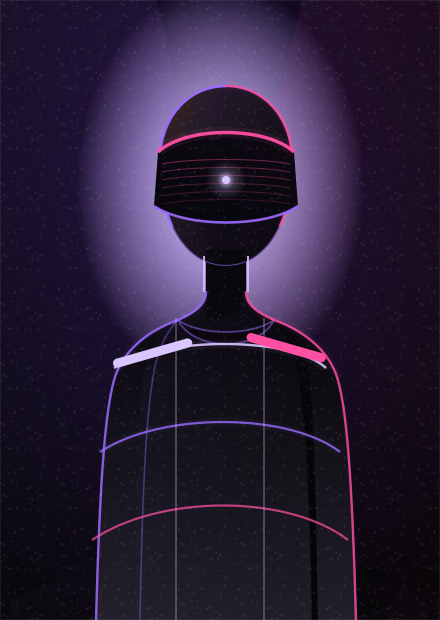
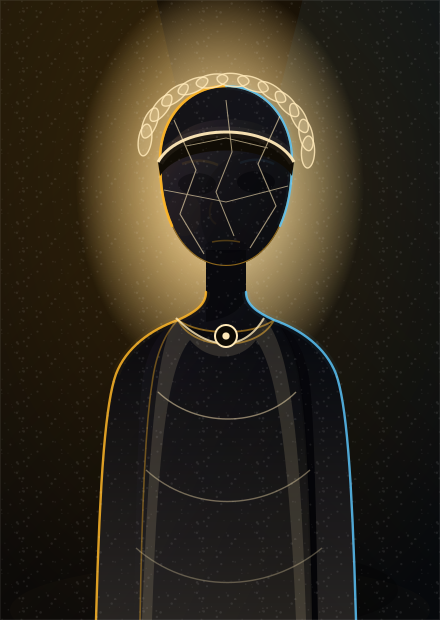
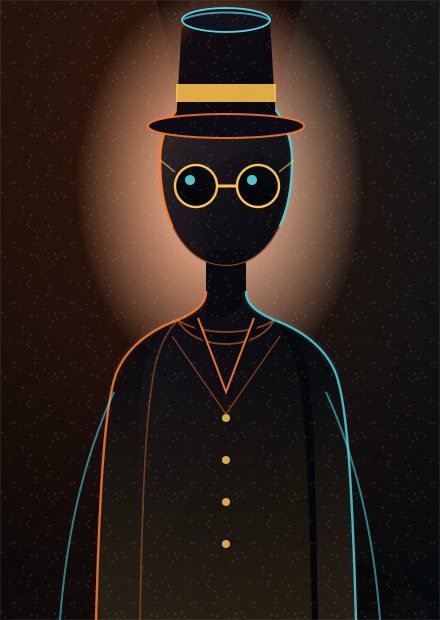
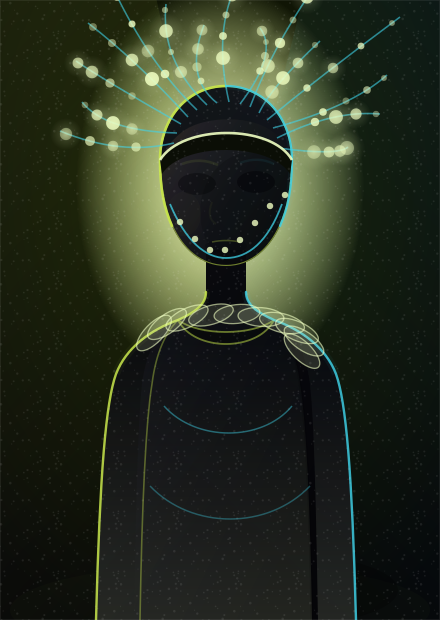
Costume is set design that walks. A mirror-suit figure moving through a cocktail hour does more for a room than another truss of fixtures — and it photographs. Every character below is a format we cast, dress and choreograph into the plot.

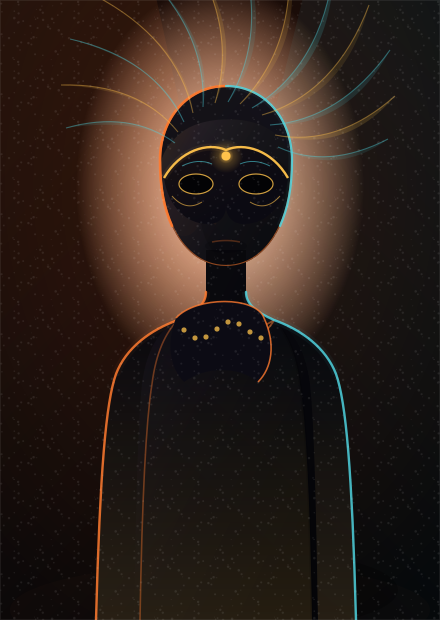
  • Performer in a lacquered filigree eye-mask, feathered crest and beaded ruff collar

    The Masked Host

    Arrival & welcome · Gala, awards, anniversary

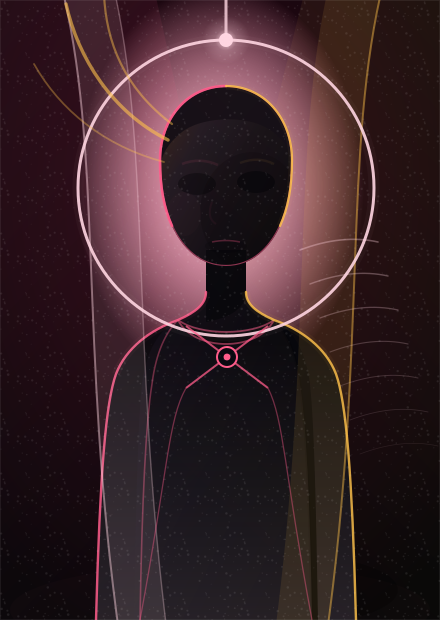
  • Aerialist framed inside a suspended lyra hoop with silks falling either side

    Aerial

    Reveal moment · Requires rigging survey

  • Mirror-suit performer scattering stage light across the room

    Mirror Suit

    Roaming · Multiplies every fixture you hang

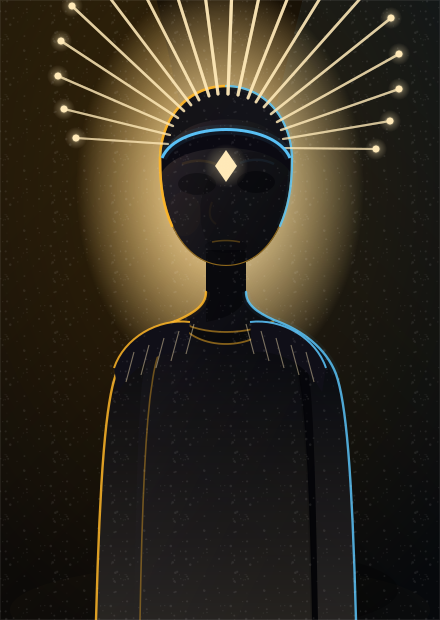
  • Performer in a radiating spoke headdress and plated shoulder armour

    Statement Headdress

    Photo moment · Product launch, brand reveal

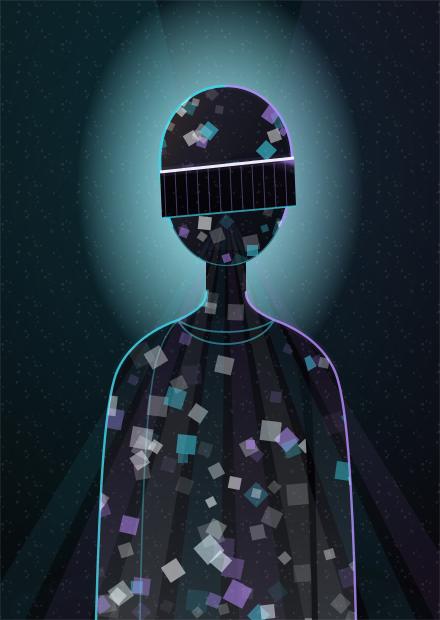
  • Performer in a lit visor and EL-wire garment

    Lit Costume

    Dark rooms · Tech, gaming, after-party

  • Gilded living statue in a laurel crown and draped robe

    Living Statue

    Static tableau · Museums, mansions, galleries

  • Stilt-walking greeter in a tall hat, brass goggles and tailcoat

    Stilt Greeter

    Arrival · Needs 12 ft clear ceiling

  • Botanical figure crowned in stems and buds with a petal collar

    Botanical

    Daylight & garden venues · Preserved florals

Drag or scroll the rail →

04 — Capability

Nine disciplines.
One run of show.

Every service a 25–250 person brand event needs, grouped the way we actually staff it. Open a discipline to see what sits inside.

Full service detail

Creative concepting, narrative and theme development, brand-brief interpretation, renders and elevations, floor plans, moodboards, guest-journey design, KPI definition.

Sold as a standalone paid discovery. If the idea is wrong, nothing downstream saves it.

Set design, custom scenic fabrication, millwork and casework, custom bars and plinths, soft goods and drape, branded environments, retail fixturing.

The moat. Capital-intensive and genuinely hard to copy.

Lighting design — uplight, moving head, gobo, pixel mapping, architectural wash. Audio and PA design, spatial audio. LED walls, projection and projection mapping, IMAG, show control, live-stream and hybrid. Staging, rigging, power and distro.

Highest revenue volume of the nine. Table stakes done properly.

Show-opens and motion graphics, generative and real-time visuals, presentation design, content mapped to scenic geometry, event photography and videography, recap films and social cutdowns.

Content built for the geometry it lands on — not a 16:9 file stretched across a set.

Aerialists, dancers, live painters, stilt walkers, roaming characters, DJs, bands and emcees — designed into the rig, the light plot and the run of show.

The margin is in the choreography, not the booking fee.

AR and WebAR, kinetic sculpture, generative and AI-driven visuals, RFID and NFC triggers, touch walls, robotics, 360 booths, glambots, AI photo generation, mosaic walls, on-site merch customisation, scent design, atmospherics, cold sparks, CO₂, confetti, drone shows.

Highest differentiation and the strongest search demand of any category.

Culinary programming and chef's tables, live-action stations, dietary and inclusion programmes, Colorado-sourced menus, bar programme and mixology, zero-proof cocktail programmes, liquor permitting, floral and botanical installation, furniture and environments.

Mostly pass-through on the P&L. Enormous on the night.

Production management, run-of-show and stage management, venue sourcing, budget management, permits and insurance, tenting and structures, transportation, security and medical, staffing and brand ambassadors, registration and badging, event apps, accessibility and translation.

Low margin, high trust. Where a producer earns the next brief.

Denver Waste No More compliance, designed three-stream stations, waste diversion planning and reporting, compostable service ware, preserved and dried botanicals, rental-first and reuse strategy, food donation, carbon tracking, certification support.

Denver's diversion rules are a design constraint. Treated late, they cost you. Treated early, they're free.

05 — The room matters first

Ten rooms in Denver
worth building into.

We start every project with the venue, because the venue decides what is possible and what it costs. This is the working shortlist inside the city — capacities, published rates, and what we'd actually do in each one.

Hover a pin

Featured venue Platte & Cherry Creek Interstate Capacities as published July 2026 — re-verify before quoting
  1. 01 Denver Union Station — Great Hall LoDo · 270 seated · 350 standing
  2. 02 Meow Wolf Convergence Station Sun Valley · 150 – 3,500
  3. 03 Mile High Station + Ironworks Sun Valley · Up to 550 seated
  4. 04 Space Gallery Art District on Santa Fe · 250 seated · 300 standing
  5. 05 SKYLIGHT Art District on Santa Fe · 200 seated · 250 standing
  6. 06 Blanc RiNo · 150 seated · 175 standing
  7. 07 MCA Denver — Rooftop LoDo / Riverfront · Up to 200
  8. 08 Temple Denver Five Points · By level
  9. 09 Clyfford Still Museum Golden Triangle · 300 cocktail · 50 seated
  10. 10 ReelWorks Denver RiNo · Up to 700

06 — Within an hour

Breweries, castles
and a room inside a rock.

Drive forty minutes and the options change completely. Brewery buyouts with production floors as scenery, a castle on a private island, and dinner built around two sandstone monoliths at Red Rocks — available, oddly, only from November to March.

Hover a pin

Regional venue Drive times from Union Station, off-peak Elevation changes the production plan — see the FAQ
  1. 01 Red Rocks — Ship Rock Grille Morrison · ~25 min · 56 – 100
  2. 02 Dunafon Castle Idledale · ~30 min · Up to 150
  3. 03 Boettcher Mansion Lookout Mountain · ~30 min · Up to 150
  4. 04 Evergreen Lake House Evergreen · ~40 min · Max 200
  5. 05 Acreage by Stem Ciders Lafayette · ~35 min · Up to 200
  6. 06 Avery Brewing Co. Boulder · ~40 min · Multiple rooms
  7. 07 Upslope — Flatiron Park Boulder · ~40 min · Taproom buyout
  8. 08 Left Hand Brewing Longmont · ~45 min · Indoor + riverside
  9. 09 Oskar Blues Lyons · ~55 min · Room-dependent
  10. 10 Planet Bluegrass Lyons · ~55 min · Pavilion + meadow
  11. 11 Chatfield Farms Littleton · ~30 min · Multiple sites
  12. 12 Cielo at Castle Pines Castle Rock · ~35 min · Up to 200

07 — Money, up front

Projects start
at $60,000.

Publishing this costs us unqualified leads and saves everyone six weeks. If the number is wrong for you, the venue guide is still free and genuinely useful.

What does a Denver brand event actually cost in 2026?

Basic audio-visual support in Denver runs $5,000–$20,000. Mid-range production runs $40,000–$125,000. Full-scale immersive production starts around $125,000 and goes past $200,000. Premium per-attendee spend lands at $300–$500 and up. Those are Denver market figures, not national averages.

Denver production tiers, 25–250 guests
TierRangeWhat that buys
Support$5k – $20kSound, screens, basic wash. A meeting that works.
Designed$40k – $125kA real light plot, built scenic elements, custom content.
Immersive$125k – $200k+Full environment, performance, interactive layers.

Why is producing in Denver cheaper than New York or San Francisco?

Comparable production in Denver runs roughly 20–50% below New York, San Francisco and Miami — labour rates, shop space and venue minimums are all lower, while the talent pool is deep enough to draw from locally. A national agency with a Denver satellite office structurally cannot say this out loud without undercutting its own headquarters.

The practical consequence: a budget that buys a competent meeting on either coast buys a designed environment here.

08 — How it runs

From brief to house lights down.

  1. 01

    Discovery

    Paid, standalone, two weeks. Objective, audience, venue longlist, budget architecture. You own the output whether or not you continue with us.

  2. 02

    Design

    Concept, renders, elevations, floor plan, light plot, run of show. You approve a picture of the room, not a description of it.

  3. 03

    Build

    Fabrication, content production, casting and rehearsal, permits, vendor contracting, technical riders and rigging surveys.

  4. 04

    Show

    Load-in, focus, tech rehearsal, doors. One production manager on comms, one stage manager on the book.

  5. 05

    After

    Strike, diversion reporting, recap film and stills, and a debrief against the KPIs we set in week one.

09 — Questions we actually get

Straight answers.

How far in advance should we book a Denver event venue?

Three to six months for most 25–250 person events, and nine to twelve for a September–October or December date. Denver's peak runs late summer through the holidays, and the small number of genuinely distinctive rooms — Union Station's Great Hall, Blanc, SKYLIGHT — clear out first. Design and fabrication want eight weeks minimum on top of the venue hold.

Do we need a special event permit and a liquor licence in Denver?

Usually you need neither — but only if you pick the venue carefully. Most licensed venues serve under their own licence, and a licensed caterer can extend theirs to an unlicensed space. Colorado's Special Event Permit is the route people assume they'll use, and it is restricted to non-profit organisations, so it is not available to a corporate host. Tents are the trap: in Denver a permit is triggered at 200 square feet, well below the 400 sq ft threshold out-of-town producers usually assume.

Is there a noise curfew for events in Denver?

Amplified sound is generally permitted 8:00 am to 10:00 pm, with an 85 dB(A) ceiling measured at the receiving property. Exposure for getting it wrong runs to $5,000 per day. Some venues advertise "no curfew" — that is their internal policy, not a waiver of the city ordinance, and the distinction matters when a residential building sits across the street.

Does Denver's altitude change how you produce an event?

Yes, in three specific and manageable ways. Haze and fog hang differently in thinner, drier air, so atmospherics need re-timing on site rather than trusting a cue sheet from sea level. Combustion engines and generators lose output and must be sized up. And visiting talent — particularly singers and aerialists — should arrive a day early. What is not true, despite being repeated constantly: one drink here does not equal two. That effect is real at 10,000 feet, not at Denver's 5,280.

Can you work in a venue we've already booked?

Yes, and roughly half of our work starts that way. We'll ask for the venue's technical pack, rigging policy and vendor list before quoting, because those three documents determine most of the price. If the room has an exclusive AV provider or forbids ceiling rigging, we design within it — but you should know before you sign, not after.

What size events do you take?

25 to 250 guests, with projects starting at $60,000. Below 25 the production overhead stops making sense for you. Above 250 you want a company structured for volume, and we will happily name one. The band in between is deliberately where the whole business sits.

Next — Bring us the date

House lights down.

Tell us the date, the headcount and the number you have in mind. You'll get a real reply from a person who has produced the kind of show you're describing — not a form letter and a rate card.